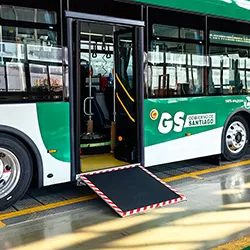
Wheelchair accessibility is a fundamental requirement in modern public and commercial transportation. A bus with wheelchair lift enables safe and efficient boarding for passengers with mobility challenges, making it essential for transit operators, schools, and private transport providers.
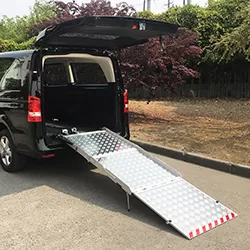
Whether you are evaluating a wheelchair lift on bus for new fleet procurement or looking for a wheelchair lift for bus for sale, understanding system types, safety requirements, and selection criteria is critical. Fleet operators can review the available bus wheelchair lift configurations before comparing load capacity, lifting height, installation position, power system, and vehicle compatibility. This guide provides a clear, practical overview of bus wheelchair lift systems and how to choose the right solution.
What Is a Wheelchair Lift on a Bus
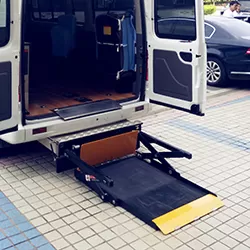
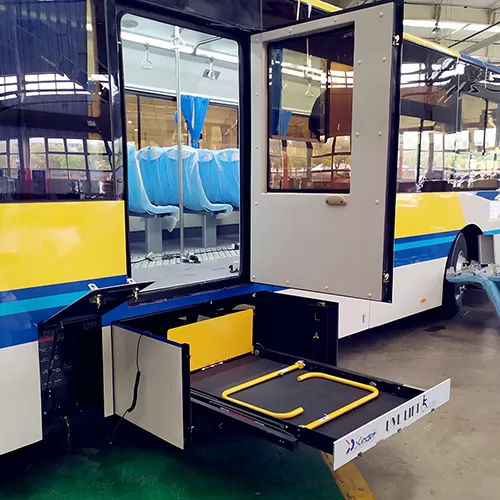
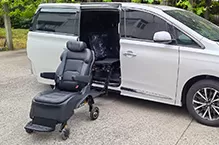
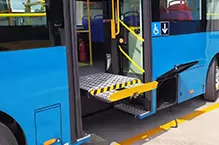
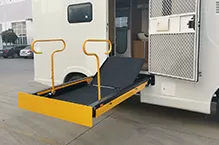
A wheelchair lift on bus is a mechanical platform designed to raise and lower passengers in wheelchairs between ground level and the vehicle floor. These systems are typically installed at the side or rear door and are operated via electric or hydraulic mechanisms. The primary functions include:
Safe vertical lifting of wheelchair users
Stable platform support during movement
Controlled entry and exit from the bus
Most modern systems are designed to meet accessibility regulations and ensure consistent operation across different passenger scenarios.
Types of Bus Wheelchair Lift Systems
Different buses require different lift configurations. Understanding these options is essential when choosing a hydraulic wheelchair lift for bus or other system types.
1. Hydraulic Wheelchair Lift for Bus
A hydraulic wheelchair lift for bus uses fluid pressure to power the lifting mechanism. Key characteristics:
High load capacity suitable for heavy power wheelchairs
Stable and consistent lifting performance
Durable for frequent daily operation
Hydraulic systems are widely used in public transit and school buses where reliability is critical.
2. Electric Wheelchair Lift Systems
Electric lifts use motor-driven actuators instead of hydraulic fluid. Advantages:
They are often used in lighter-duty applications or smaller buses.
3. Coach Wheelchair Lift
A coach wheelchair lift is designed for long-distance buses and coaches with higher floor heights. Features include:
These systems must handle greater vertical travel compared to standard city buses.
Key Components of a Bus Wheelchair Lift
Regardless of type, most systems include:
Platform for wheelchair positioning
Lift arms or scissor mechanism
Control system (wired or remote)
Safety barriers or roll stops
Power unit (hydraulic or electric)
Understanding these components helps when evaluating performance and maintenance requirements.
Safety Requirements and Best Practices
Safety is the most critical factor when operating a wheelchair lift on bus.
1. Secure Boarding and Positioning
Passengers must be properly positioned on the platform before lifting begins. The wheelchair should be aligned and brakes engaged where applicable.
2. Use of Safety Barriers
Modern lifts include:
Front roll stops
Side barriers
These prevent accidental movement during lifting.
3. Controlled Operation
Operators should:
Use smooth, continuous controls
Avoid sudden stops or starts
Monitor the passenger throughout the lifting process
4. Regular Inspection and Maintenance
Routine checks should include:
Consistent maintenance ensures reliability and reduces downtime.
Key Factors When Choosing a Wheelchair Lift for Bus
When evaluating a wheelchair lift for bus for sale, consider the following:
1. Load Capacity
The system must support:
Wheelchair weight
Passenger weight
Additional equipment
Choosing a lift with sufficient safety margin improves long-term durability.
2. Bus Type and Configuration
Different vehicles require different solutions:
City buses typically use side-entry lifts
School buses often use mid or rear entry
Coaches require high-lift systems
Vehicle layout directly affects lift selection.
3. Frequency of Use
For high-frequency applications such as public transit:
For lower-frequency use, electric systems may be sufficient.
4. Installation Space
Available space determines whether the lift can be:
Compact designs can improve passenger space efficiency.
5. Compliance and Accessibility Standards
Lift systems must meet local accessibility regulations to ensure safe and legal operation. This is especially important for public transportation and school systems.
Common Mistakes to Avoid
When selecting a bus with wheelchair lift, avoid these common issues:
Choosing a system without considering vehicle compatibility
Underestimating load requirements
Ignoring maintenance needs
Prioritizing cost over reliability
Selecting the wrong lift type for usage frequency
These mistakes can lead to operational inefficiencies and increased long-term costs.
How Xinder Supports Bus Wheelchair Lift Solutions
Xinder focuses on practical and adaptable mobility solutions for commercial vehicles. In the context of coach wheelchair lift and bus systems, this includes:
Designing for different bus configurations
Supporting stable and safe lifting performance
Ensuring compatibility with real-world transport environments
The goal is to provide systems that align with operational needs rather than overcomplicated specifications.
Conclusion
A well-designed wheelchair lift on bus is essential for safe and accessible transportation. Whether selecting a hydraulic wheelchair lift for bus or evaluating different system types, the decision should be based on real operational needs. By focusing on:
Load capacity and durability
Vehicle compatibility
Safety features and compliance
Maintenance and long-term reliability
transport providers can ensure efficient, safe, and inclusive mobility solutions.







 English
  한국어
한국어  français
  Deutsch
  Español
  italiano
  русский
  português
  Malay
Malay  Indonesia
  العربية