For accessible vehicle conversion projects, passenger transfer is often one of the most important design challenges. A conventional fixed seat may be difficult to use for passengers with limited mobility, especially when the seat is high, the door opening is narrow, or the passenger needs assistance transferring between a wheelchair and the vehicle.
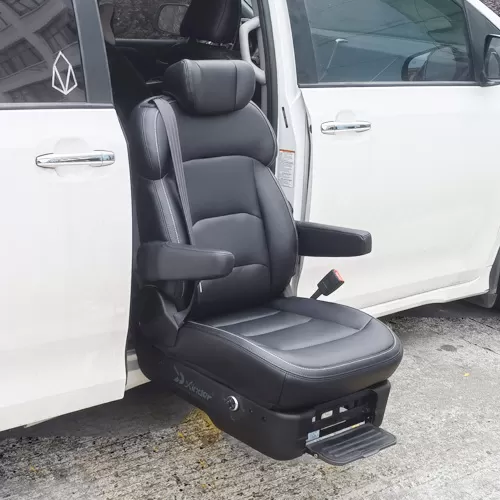
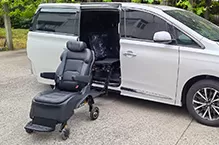
A car with a rotating passenger seat uses a swivel-seat mechanism to move the passenger seat toward the door, and some systems can also lower the seat to reduce the vertical transfer height. The right system should be selected according to vehicle space, door opening, seat travel path, passenger transfer needs, load requirements, electrical integration and the intended conversion standard.
The following guide explains how rotating passenger seats work, who may benefit from them, which functions matter most, and what vehicle converters, mobility dealers and accessibility-equipment buyers should evaluate before specifying a system for a conversion project.
What Is a Car With a Rotating Passenger Seat?
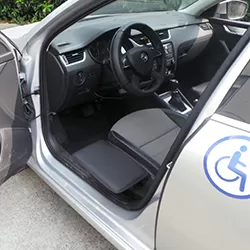
A car with a rotating passenger seat is a vehicle in which the passenger seat can turn toward the door to create a more accessible boarding and transfer position. The concept may refer to a factory-built accessible vehicle or to a conventional vehicle converted with an aftermarket swivel-seat system.
In an aftermarket conversion, the rotating mechanism is installed as part of the seating system. Depending on the product design, the seat may rotate only, or it may combine rotation with outward travel and lowering. The latter is particularly useful when the vehicle floor or seat position is higher than the passenger's wheelchair or transfer position.
The main purpose is not simply to make the seat turn. It is to reduce the distance, height difference and body movement required during passenger transfer. This makes the rotating seat part of a broader vehicle-accessibility solution rather than a comfort accessory alone.
For B2B buyers, this distinction matters because the correct product depends on the vehicle platform, installation space and transfer requirement. A system intended for a sedan may face different geometry constraints from a system specified for an SUV, MPV or other accessible-vehicle conversion.
Who Can Benefit From an Electric Swivel Car Seat?
Electric swivel seats are commonly considered for passengers who have difficulty stepping into a vehicle, turning inside the cabin, lowering themselves onto a fixed seat or transferring from a wheelchair. The system can reduce the amount of manual lifting and repositioning required during entry and exit.
Typical end-user groups may include wheelchair users, older passengers, people with limited lower-body mobility and passengers who require assisted transfer. The suitability of a swivel seat should still be assessed according to the individual's transfer method, available space and vehicle configuration rather than by user category alone.
From a B2B perspective, the relevant buyers are often accessible-vehicle converters, mobility-equipment dealers, rehabilitation-vehicle suppliers, vehicle adaptation companies and organizations developing mobility solutions for passenger transport. These buyers need to consider not only user comfort but also repeatable installation, vehicle compatibility, certification and after-sales service.
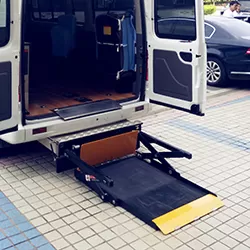
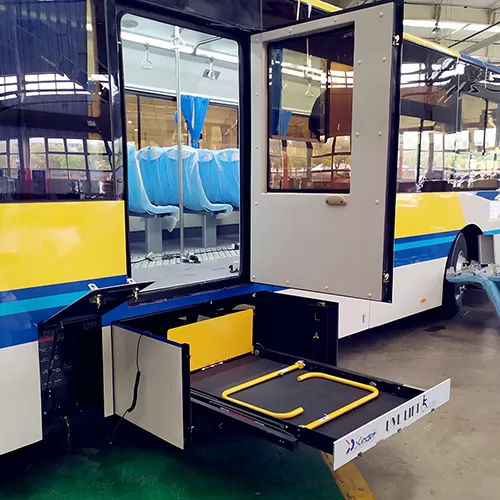
A rotating passenger seat can also be part of a wider accessibility package that includes wheelchair lifts, ramps, restraints, steps or other mobility equipment. The seating solution should therefore be specified as one component within the overall vehicle-conversion plan.
Rotation, Lowering and Seat Position: Which Functions Matter?
Rotation is the basic function of a swivel seat. By turning the seat toward the door opening, it can reduce the need for a passenger to rotate their body inside a confined cabin. However, rotation alone may not solve the transfer problem when the original seat position is too high or too far inside the vehicle.
Lowering adds vertical movement. This can bring the seat closer to a wheelchair or standing transfer height and reduce the lift required from the passenger or assistant. For high-floor vehicles, this function can be as important as rotation itself.
Seat position and travel path are equally important. The mechanism must move through the available cabin and door space without interfering with the dashboard, door trim, B-pillar, center console or other interior components. The final transfer position also needs to provide adequate legroom and clearance for the passenger.
Control method is another specification point for electric systems. Depending on the product, buyers may evaluate hand controls, wired or wireless controllers, mobile control options, emergency operation and the ease with which caregivers can operate the seat.
Other practical items include armrests, footrests, seat comfort, movement smoothness and system stability. These features influence the complete transfer experience, but they should be evaluated together with structural, electrical and vehicle-integration requirements.
What to Check When Specifying a Rotating Passenger Seat for Vehicle Conversion
For converters and mobility-equipment buyers, a pre-specification check helps reduce installation problems and improves the likelihood that the selected seat will fit the target vehicle and transfer scenario.
Specification factor | Why it matters |
Vehicle model and cabin space | Determines whether the mechanism, seat and travel path can fit inside the vehicle. |
Door opening width and height | Affects rotation clearance, outward movement and the usable passenger transfer position. |
Seat height and floor height | Influences whether rotation alone is sufficient or a lowering function is required. |
Dashboard, console and pillar clearance | Helps identify interference points along the seat movement path. |
Original seat functions | Determines whether original seat features can be retained after conversion. |
Passenger load requirement | Must match the rated capacity and intended transfer use of the selected system. |
Electrical integration | Electric swivel and lowering functions require suitable vehicle power and control integration. |
Mounting and structural requirements | Installation points and vehicle structure must support the conversion method. |
Certification and test documentation | Important for professional conversion projects, market compliance and buyer confidence. |
Installer capability and service support | Correct installation, adjustment and after-sales support are critical to safe long-term use. |
Vehicle compatibility should be confirmed before final product selection. Sedans, SUVs and MPVs may all be candidates for swivel-seat conversion, but available space varies significantly between models. Measurements and vehicle data should be reviewed rather than assuming that one system fits every vehicle.
For projects that retain the original seat, converters should also verify whether electric adjustment, heating, occupancy sensors, airbags or other seat-related functions can be preserved. The final decision depends on the actual vehicle and the integration approach.
Commercial buyers should also request the relevant installation guidance, product specifications and test documentation before standardizing a system across multiple vehicle conversions.
FAQs About Cars With Rotating Passenger Seats
Can a rotating passenger seat be installed in any car?
No. Compatibility depends on cabin space, door opening, seat mounting conditions and the movement path required by the swivel mechanism. Vehicle data should be checked before specification.
What is the difference between a swivel seat and a seat lift?
A swivel seat primarily rotates the passenger seat toward the door. A system with a lowering or lift function also changes the seat height, which can reduce the vertical transfer distance.
Can the original passenger seat be retained?
In some conversions it may be possible, but this depends on the vehicle, mechanism and original seat functions. The vehicle should be measured and the integration method confirmed before installation.
Are swivel seats suitable for SUVs and MPVs?
They can be, but these vehicles often have higher seat and floor positions. A system with lowering capability may be more appropriate when transfer height is a key concern.
What should B2B buyers request from a swivel-seat supplier?
Buyers should review vehicle compatibility guidance, technical specifications, load ratings, control options, installation requirements, relevant test or certification documentation and after-sales support.
How should a converter choose between rotation-only and rotation-plus-lowering systems?
The decision should be based on transfer height, vehicle floor height, door geometry, passenger transfer method and available installation space. A rotation-only system may be sufficient in some vehicles, while others require additional vertical movement.
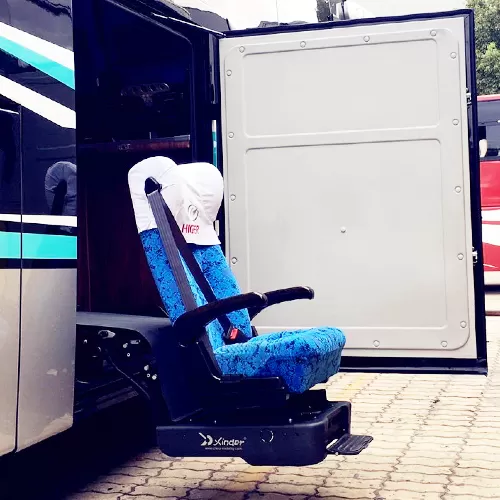
For mobility dealers, accessible-vehicle converters and retrofit specialists evaluating an electric swivel car seat, Xinder offers swivel-seat solutions designed to support passenger transfer in vehicle accessibility projects. Its current range includes swivel car seats as well as a seat-lift solution for buses and coaches, with product information covering electric rotation and descent, multiple control methods, comfort features and relevant test or certification information. Vehicle dimensions and installation conditions should be confirmed before a model is specified for a project.







 English
  한국어
한국어  français
  Deutsch
  Español
  italiano
  русский
  português
  Malay
Malay  Indonesia
  العربية