High-floor coaches can create a significant vertical gap between the ground and the passenger cabin. For accessibility projects, the challenge is not only reaching the doorway but also choosing a boarding solution that fits the vehicle layout, passenger transfer method and required seating capacity.
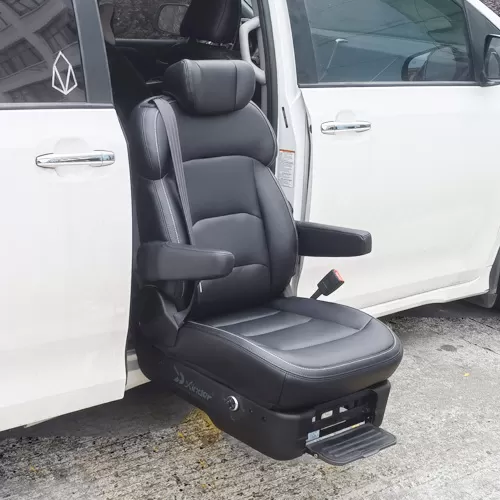
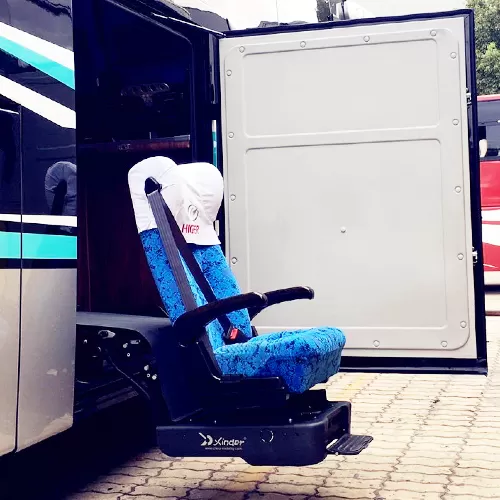
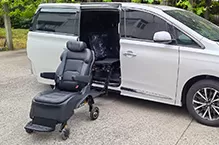
A swivel bus seat with a lifting mechanism can lower and rotate a passenger seat outside a high-floor coach so that a passenger can transfer from a wheelchair at a more accessible height. The seat then lifts and rotates back into the vehicle. Unlike a wheelchair lift, this approach is designed for passengers who transfer from the wheelchair to the vehicle seat rather than remain seated in the wheelchair during boarding.
This guide explains how swivel bus seats work, how they differ from wheelchair lifts, which vehicle and project factors should be evaluated, and when this solution can be a practical choice for coach manufacturers, accessible vehicle converters and mobility equipment suppliers.
How Do Swivel Bus Seats Help Passengers Board High-Floor Buses?
A high-floor bus or coach places the passenger cabin well above ground level, which can make conventional steps difficult for passengers with limited mobility. A rotating and lifting seat changes the boarding process by bringing the passenger seat closer to an accessible transfer position outside the vehicle.
The operating sequence is straightforward: the seat is lowered from the coach interior, rotates outward, and lowers again to the required transfer height. The passenger transfers from the wheelchair to the seat independently or with assistance. The seat then rises, rotates back toward the vehicle and is lifted into the cabin.
This makes the seat itself part of the boarding system. Instead of moving the occupied wheelchair into the coach, the system supports transfer to a conventional passenger seat before the passenger enters the cabin. For project planners, this distinction affects interior layout, wheelchair storage, boarding procedures and the type of passenger the system is intended to serve.
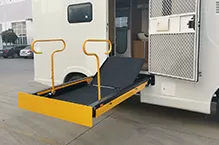
Swivel Bus Seat vs Wheelchair Lift: What Is the Difference?
Both systems can improve accessibility, but they solve the boarding problem in different ways. The correct choice depends primarily on whether the passenger transfers to a vehicle seat or remains in the wheelchair.
Comparison | Swivel Bus Seat | Wheelchair Lift |
Passenger boarding method | Passenger transfers from wheelchair to the lowered passenger seat | Passenger and wheelchair are raised together on a platform |
Passenger position during travel | Passenger uses a vehicle passenger seat | Passenger may remain in the wheelchair in a designated wheelchair space |
Interior space strategy | Can preserve the existing passenger-seat layout when the conversion permits | Requires suitable wheelchair space and restraint arrangements |
Primary mechanism | Seat rotation plus vertical lifting/lowering | Platform lifting/lowering |
Best evaluated for | Projects where passenger transfer to a vehicle seat is practical | Projects where the passenger needs to remain in the wheelchair |
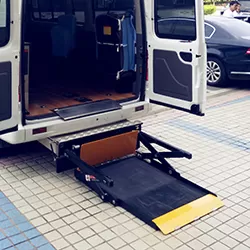
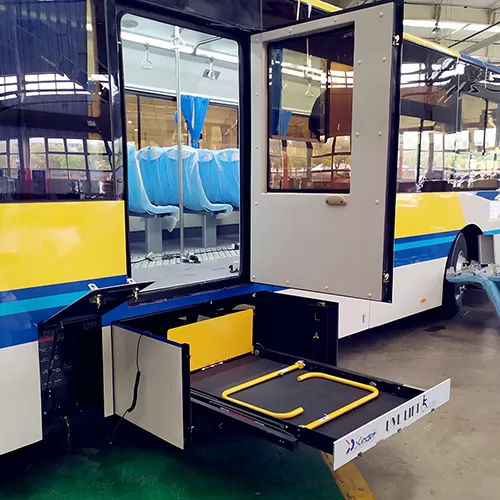
Neither system is universally better. A wheelchair lift is the more appropriate concept when the passenger must board and travel while remaining in the wheelchair. A swivel lifting seat is more relevant when transfer to a passenger seat is possible and the project wants to retain a conventional seated travel position.
This distinction should be established early in an accessibility conversion because it influences door space, floor structure, interior layout, wheelchair restraints, seating capacity and installation complexity.
Key Factors When Specifying a Swivel Bus Seat for High-Floor Coach Conversion
A swivel seat should be specified as part of the vehicle conversion rather than as an isolated accessory. High-floor coach applications are particularly sensitive to vehicle dimensions and the available movement envelope of the seat.
Project factor | What to evaluate |
Vehicle floor height | Required vertical travel between the cabin and the passenger transfer position. |
Door opening and surrounding structure | Clearance for the seat to rotate and move outside without interference. |
Interior layout | Relationship with adjacent seats, aisle width, handrails and other interior components. |
Seat travel path | Clearance throughout lowering, outward rotation, transfer and return movement. |
Passenger transfer height | Whether the lowered seat position supports practical wheelchair-to-seat transfer. |
Load requirement | Rated capacity required for the intended passenger group and project specification. |
Electrical integration | Vehicle power supply, control arrangement, wiring and protection requirements. |
Mounting structure | Whether the floor/chassis area can support the mechanism and approved installation method. |
Compliance and documentation | Applicable vehicle conversion, safety and market-specific requirements. |
Installation capability | Availability of a qualified converter familiar with the vehicle model and accessibility equipment. |
Vehicle model data should therefore be reviewed before a specific swivel-seat solution is confirmed. The larger movement range required in a high-floor coach can make installation more complex than a simple seat replacement, so space studies and installation planning are important parts of the specification process.
When Is a Swivel Seat Better Suited to a Coach Accessibility Project?
A swivel lifting seat is especially relevant when the accessibility objective is to help a passenger transfer from a wheelchair into a conventional coach seat. This can allow the project to address boarding assistance without designing the entire passenger journey around an occupied wheelchair space.
It can also be attractive where preserving passenger seating capacity and cabin space is important. Xinder notes that its seat-lifting approach can retain the total number of vehicle seats without removing other seats or opening an additional wheelchair space, subject to the actual vehicle layout and conversion feasibility.
However, the solution is not appropriate for every passenger or every vehicle. If the passenger cannot transfer from the wheelchair, a wheelchair lift and suitable wheelchair restraint area may be required instead. Likewise, insufficient door clearance, an unsuitable floor structure or interference with the seat travel path can rule out a swivel-seat conversion.
For B2B projects, the decision should therefore be based on passenger transfer requirements, coach geometry, seating-capacity objectives, installation feasibility and applicable compliance requirements rather than on the seat mechanism alone.
FAQs About Swivel Bus Seats
Can swivel bus seats be installed in any coach?
No. Compatibility depends on the coach model, floor height, door opening, interior layout, mounting conditions and the movement space required by the seat. High-floor coach conversions should be assessed using actual vehicle data.
Are swivel bus seats suitable for high-floor buses?
They can be particularly relevant to high-floor buses and coaches because the lifting mechanism can bridge the vertical distance between the passenger cabin and an accessible transfer position. The required travel and available installation space must still be verified.
What is the difference between a swivel bus seat and a wheelchair lift?
A swivel lifting seat is designed for a passenger who transfers from the wheelchair to a vehicle seat. A wheelchair lift raises or lowers the passenger together with the wheelchair on a platform.
Does a swivel bus seat require a wheelchair space inside the coach?
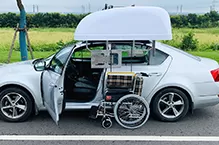
Not necessarily. When the passenger transfers to the vehicle seat, the conversion can avoid using a dedicated occupied-wheelchair travel position. Wheelchair storage and local accessibility requirements still need to be considered.
What vehicle dimensions should be checked before specification?
Important checks include floor height, door width and height, interior clearance, seat movement envelope, mounting area and the relationship with nearby seats, aisles and interior structures.
Can passenger seating capacity be retained after installation?
It may be possible. Xinder states that its seat-lifting solution can retain the vehicle's total seat count without removing other seats, but this should be confirmed for the specific coach layout and conversion design.
Swivel Seating for High-Floor Coach Conversion Projects
For coach manufacturers, accessibility converters and mobility equipment distributors evaluating swivel bus seats, Xinder provides a seat-lift solution designed for high-floor bus and coach applications. The system lowers and rotates the seat outside the vehicle for passenger transfer and returns it to the cabin after boarding. Because compatibility depends on the vehicle model and internal space layout, project-specific vehicle dimensions should be reviewed before the equipment is specified.







 English
  한국어
한국어  français
  Deutsch
  Español
  italiano
  русский
  português
  Malay
Malay  Indonesia
  العربية