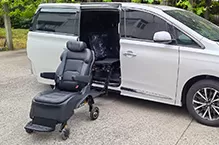
Wheelchair ramps are one of the most widely used accessibility solutions for vehicles and public transportation. Whether installed in a bus ramp for wheelchair access or used in private vehicles, ramps provide a simple and reliable way for wheelchair users to enter and exit safely.
From wheelchair electric ramp systems to manual ramp solutions, each option serves different operational needs. This guide explains how these systems work, compares their differences, and helps you choose the right solution based on real-world usage.
Structured Summary
Definition: A wheelchair ramp is an inclined platform that allows wheelchair users to enter vehicles without vertical lifting
Main types: Electric ramps, manual ramps, and assisted systems
Best for: Low-floor buses, vans, and mobility vehicles
Key benefit: Simple, fast, and cost-effective accessibility solution
Limitation: Requires proper slope and space for safe use
What Is a Wheelchair Bus Ramp
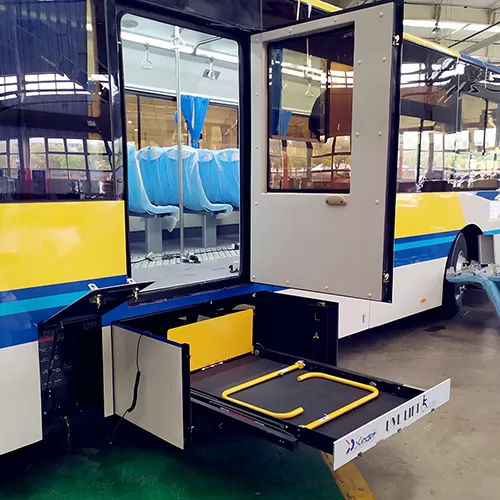
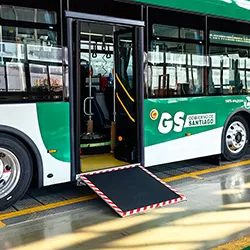
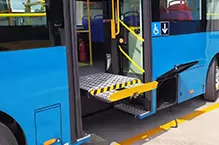
A wheelchair bus ramp is a deployable inclined platform that bridges the gap between ground level and the vehicle floor, allowing wheelchair users to roll into the vehicle. Unlike lifts, ramps do not lift vertically. Instead, they rely on a controlled slope to ensure smooth entry. Typical system characteristics:
Installed at bus doors or vehicle entry points
Deploys manually or automatically
Designed with anti-slip surfaces and safety edges
In modern low-floor buses, ramps are often integrated into the vehicle structure and can deploy within seconds for efficient boarding.
Types of Wheelchair Ramp Solutions
Electric Wheelchair Ramp
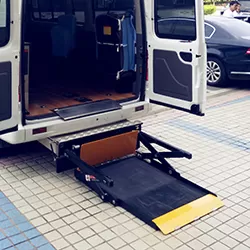
A wheelchair electric ramp is powered by a motor and deployed automatically using a control button. Key features:
One-touch automatic deployment and retraction
Smooth and consistent operation
Suitable for high-frequency use such as public buses
Electric ramps are commonly used in city buses, where fast boarding and operational efficiency are essential. Some systems support loads up to 1000 pounds and are fully integrated into the vehicle.
Manual Ramp
A manual ramp is operated by hand and does not require electrical power. Key characteristics:
Simple structure and lower cost
Lightweight aluminum construction
Reliable even without power supply
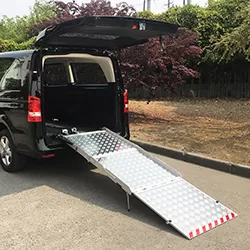
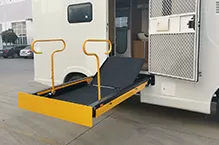
Manual ramps are often installed under bus steps or stored inside the vehicle, allowing deployment only when needed.
Hybrid Ramp Systems
Hybrid systems combine electric and manual functions. Advantages:
This type of system improves reliability and ensures accessibility even in emergency situations.
Electric vs Manual Ramp Comparison
| Factor | Wheelchair Electric Ramp | Manual Ramp |
|---|
| Operation | Automatic | Manual |
| Efficiency | High (fast deployment) | Moderate |
| Maintenance | Higher | Low |
| Cost | Higher | Lower |
| Best use case | Public buses, frequent use | Backup or low-frequency use |
Role of Winch for Wheelchair Ramp Systems
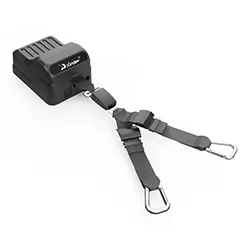
In some vehicle setups, a winch for wheelchair ramp is used as an assistive device. It is not a ramp itself but works alongside the ramp to:
Pull heavy wheelchairs up the slope
Reduce physical effort for caregivers
Improve safety on steeper ramps
Winch-assisted ramps are especially useful for:
Heavy electric wheelchairs
Long or steep ramp angles
Assisted boarding scenarios
Key Factors When Choosing a Bus Ramp for Wheelchair Access
1. Vehicle Type and Floor Height
Ramp suitability depends heavily on vehicle design.
2. Ramp Slope and Accessibility Standards
The deployment angle is critical for usability. Typical ramp angles range between 10° and 15° for safe wheelchair access. Steeper ramps increase difficulty and safety risks.
3. Frequency of Use
Operational demand directly affects system selection.
4. Load Capacity
Ramps must support:
Wheelchair weight
Passenger weight
Typical bus ramp capacity ranges around 300–1000 kg depending on system design.
5. Installation and Space Requirements
Modern ramps are designed to:
Fold into the vehicle floor or step area
Avoid occupying passenger space
Deploy without obstructing boarding flow
This is especially important for public transportation efficiency.
Common Mistakes to Avoid
When selecting a wheelchair bus ramp, avoid:
Choosing a ramp without considering slope angle
Ignoring vehicle compatibility
Underestimating load requirements
Overlooking long-term maintenance
Selecting manual ramps for high-frequency operations
These issues often lead to poor user experience and operational inefficiencies.
How Xinder Supports Wheelchair Ramp Solutions
Xinder provides a range of accessibility solutions for buses and vehicles, including:
These systems are designed to:
Fit different vehicle configurations
Provide stable and safe boarding
Support long-term operational reliability
This practical approach focuses on real-world usage rather than unnecessary complexity.
Conclusion
Wheelchair ramps remain one of the most effective accessibility solutions for vehicles and buses. From wheelchair electric ramp systems to manual ramp designs, each option serves a specific need. By focusing on:
you can choose a solution that ensures safe, efficient, and accessible transportation for all users.
FAQ
What is a wheelchair bus ramp
A wheelchair bus ramp is an inclined platform that allows wheelchair users to enter a bus without lifting.
What is the difference between electric and manual ramps
Electric ramps deploy automatically, while manual ramps require physical operation.
Can a ramp be used with a power wheelchair
Yes, but capacity and slope must be carefully considered, and assistance such as a winch may be needed.
When should you use a winch with a ramp
A winch is useful when handling heavy wheelchairs or when the ramp angle is steep.






 English
  한국어
한국어  français
  Deutsch
  Español
  italiano
  русский
  português
  Malay
Malay  Indonesia
  العربية