Wheelchair restraint systems are essential safety components used in accessible transportation vehicles. They are designed to secure wheelchairs during transit and reduce the risk of movement caused by braking, turning, or sudden road impact.
By properly anchoring the wheelchair to the vehicle structure, these systems help ensure passenger stability and improve overall transportation safety. They are widely used in accessible vans, buses, ambulances, and mobility service vehicles. In modern mobility solutions, a complete system often includes wheelchair restraint straps, floor anchoring points, and optional assistance devices such as a wheelchair winch for positioning support.
Structured Summary
Definition:
A wheelchair restraint system is a vehicle-installed securement system used to hold a wheelchair in place during transportation.
Main components:
Wheelchair restraint straps, anchorage systems, retractors, and optional wheelchair winch systems.
Primary purpose:
Improve passenger safety by preventing wheelchair movement during transit.
Best applications:
Accessible transport vehicles such as vans, buses, and medical transport fleets.
Key limitation:
Performance depends on correct installation, proper usage, and routine inspection.
What Is a Wheelchair Restraint System?
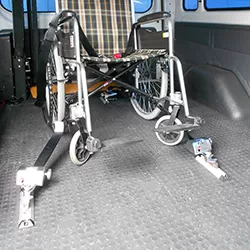
A wheelchair restraint system for a transportation vehicle is a set of securement devices designed to hold a wheelchair firmly in place during travel.
The system typically connects the wheelchair frame to fixed anchor points installed on the vehicle floor. These connection points form a stable structure that helps distribute force evenly during acceleration, braking, and cornering. Unlike standard vehicle seating, wheelchairs require external restraint because they are not permanently fixed to the vehicle body.
How Wheelchair Restraint Systems Improve Safety
Wheelchair restraint systems enhance transportation safety in several important ways:
1. Preventing Wheelchair Movement
During driving conditions such as sudden stops or sharp turns, an unsecured wheelchair can shift or tip. Restraint systems prevent this by firmly securing the wheelchair to the vehicle floor.
2. Reducing Impact Forces
By distributing load across multiple anchor points, the system reduces concentrated stress on both the wheelchair and occupant.
3. Improving Passenger Stability
Stable positioning reduces discomfort and ensures a safer travel experience for wheelchair users.
4. Supporting Safety Compliance
Many systems are designed according to international standards such as ISO 10542, which defines performance requirements for wheelchair securement systems.
Key Components of a Wheelchair Restraint System
Wheelchair Restraint Straps
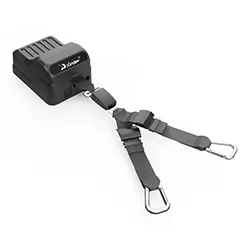
Wheelchair restraint straps are high-strength belts that connect the wheelchair frame to vehicle anchor points. Key characteristics include:
High-tensile webbing material
Adjustable tension control
Secure hook or latch connections
These straps form the foundation of most wheelchair securement systems.
Wheelchair Winch Systems
A wheelchair winch assists in positioning the wheelchair inside the vehicle before final securement. Key benefits include:
Easier wheelchair alignment
Reduced manual pushing force
Improved loading consistency
In many systems, the winch works together with restraint straps to streamline the securement process.
Anchorage Systems
Anchorage systems are fixed floor-mounted components that serve as the structural base for restraint straps. They are designed to withstand high load forces generated during vehicle movement.
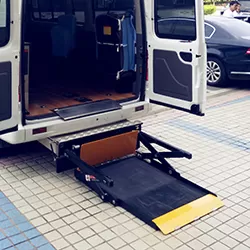
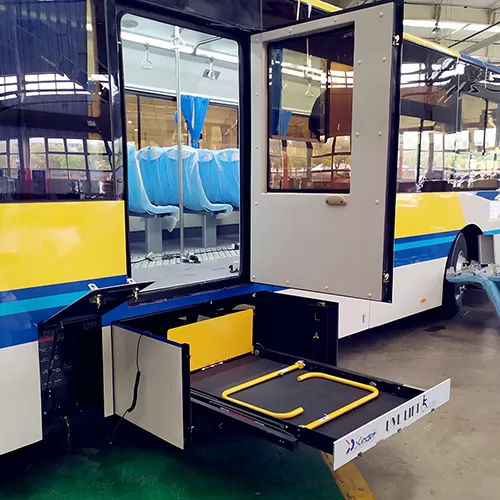
Wheelchair Restraint Systems vs Wheelchair Lifts
Wheelchair restraint systems and wheelchair lifts serve different but complementary functions in accessible transportation.
Comparison Table
| Feature | Wheelchair Restraint System | Wheelchair Lift |
|---|
| Main Function | Secures wheelchair during travel | Helps wheelchair enter/exit vehicle |
| Usage Stage | During transportation | Boarding and disembarking |
| Safety Role | Prevents movement inside vehicle | Enables safe access to vehicle |
| Key Components | Straps, anchor points, optional winch | Hydraulic or electric lifting platform |
| Dependency | Works inside vehicle cabin | Works at vehicle entrance |
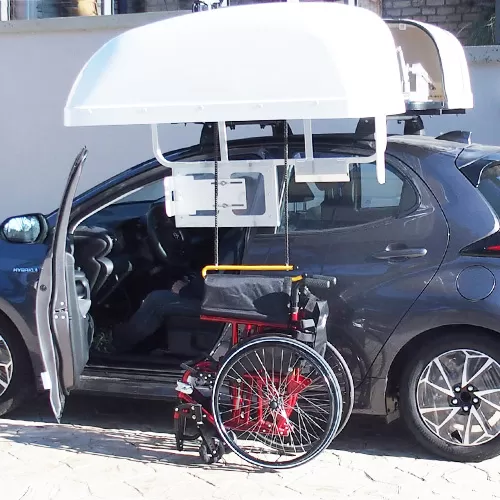
Some vehicle wheelchair lift manufacturers also offer integrated restraint solutions, but both systems remain functionally distinct.
How to Choose a Wheelchair Restraint System
Selecting the right system depends on several practical factors:
1. Vehicle Type
Different vehicles require different anchorage layouts and restraint configurations.
2. Wheelchair Weight and Design
Heavier or powered wheelchairs may require reinforced straps and higher load-rated systems.
3. Ease of Operation
Retractable systems or winch-assisted solutions improve efficiency, especially in frequent-use environments.
4. Maintenance Requirements
Regular inspection of straps, hooks, and anchor points ensures long-term safety performance.
Common Mistakes to Avoid
Using insufficient restraint points
Ignoring strap wear or damage
Incorrect installation of anchorage systems
Lack of operator training
These issues can significantly reduce system effectiveness and compromise passenger safety.
Conclusion
Wheelchair restraint systems are a fundamental part of safe and reliable vehicle transportation for wheelchair users. By securely anchoring the wheelchair and distributing forces evenly, these systems help reduce movement risks and improve passenger stability.
When combined with proper installation, regular maintenance, and optional support tools such as wheelchair winch systems, they provide a complete solution for accessible mobility across different vehicle types.
FAQ
What is a wheelchair restraint system used for?
It is used to secure a wheelchair inside a vehicle to prevent movement during transportation and improve passenger safety.
What are wheelchair restraint straps?
They are high-strength straps that connect the wheelchair frame to vehicle anchor points and form the main securement mechanism.
How do wheelchair restraint systems improve safety?
They prevent wheelchair movement, distribute impact forces evenly, and maintain stable positioning during vehicle travel.
What is the purpose of a wheelchair winch?
A wheelchair winch helps position the wheelchair correctly inside the vehicle before it is secured with restraint straps.
Are wheelchair restraint systems required by safety standards?
Many systems follow international standards such as ISO 10542 to ensure safe performance under transportation conditions.










 English
  한국어
한국어  français
  Deutsch
  Español
  italiano
  русский
  português
  Malay
Malay  Indonesia
  العربية